Image Augmentation in Practice: In-Distribution vs Out-of-Distribution, Test-Time Augmentation, and the Manifold View
Learn when image augmentation helps or hurts: master in-distribution vs out-of-distribution techniques, test-time strategies, and manifold geometry for production vision systems.
The Core Problem: More Data Isn't Always Better Data
A computer vision model underperforms on real-world inputs. The instinct is to throw more augmented images at it. But not all augmentations are equal — some keep the data realistic, others push it into territory the model has never seen, and a few destroy the very labels they're supposed to preserve. Choosing wrong doesn't just waste compute. It actively damages model quality.
The distinction between in-distribution and out-of-distribution augmentations, the role of test-time augmentation, and the concept of a data manifold form a practical framework for making these decisions. Here is what teams building production vision systems need to know.
In-Distribution Augmentation: Staying Close to Reality
In-distribution (ID) augmentations generate training samples that look like they could have come from the original data collection process. Horizontal flips for street-scene images, slight rotations for satellite photos, minor brightness adjustments for product photography — these transformations reflect real variation the model will encounter in deployment.
Put simply: if a human photographer could have taken the augmented image under normal conditions, it's in-distribution.
The business case is straightforward. As noted in research from NeurIPS 2024, augmentations had the second greatest positive impact on OOD generalization across all variables studied — behind only increasing the number of training classes. In their paired experiments (256 pairs, 512 total), models trained with augmentations retained 78.41% of OOD performance compared to 64.26% without augmentations (p < 0.001). That's a meaningful gap from basic augmentations like random resized crops and horizontal flips.
Domain-specific choices matter here. Medical imaging benefits from elastic deformations and intensity shifts more than from random flips. Aerial imagery needs rotation invariance. Product photography needs color consistency. As The Essential Guide to Data Augmentation emphasizes, different data modalities require tailored augmentation approaches that preserve crucial domain characteristics.
Practical Tools for ID Augmentation
The tooling landscape is mature. Albumentations offers more than 60 transformations with fast execution. Keras provides built-in augmentation layers like RandomFlip and RandomRotation that integrate directly into the model pipeline, avoiding the training slowdown that comes from external preprocessing. Built-in augmentations also improve reproducibility — the same techniques are applied consistently across runs, which matters for debugging and compliance.
Real numbers: built-in augmentations in frameworks like YOLOv8 avoid the overhead of external libraries entirely, keeping training speed intact while still diversifying the dataset.
Out-of-Distribution Augmentation: When Realism Isn't Enough
Out-of-distribution (OOD) augmentation deliberately creates training images that look unrealistic — heavy color distortion, aggressive geometric transforms, strong dropout patterns. The images are clearly "wrong" to a human eye, but the label remains unambiguous.
This is where most teams get it wrong. They either avoid OOD augmentations entirely (leaving performance on the table) or apply them recklessly (destroying label integrity and wasting model capacity).
According to an in-depth analysis on Data Science Collective, the practical strategy follows a clear sequence:
- Pick the highest-capacity model the compute budget allows.
- It will overfit on the raw data.
- Regularize with progressively more aggressive augmentation until overfitting is controlled.
For high-capacity models, in-distribution augmentation alone often fails to provide enough regularization pressure. Heavy color distortion, aggressive dropout, and strong geometric transforms — all unrealistic, all with clearly preserved labels — become the primary regularization tool. The model has enough capacity to handle the harder learning task, and the augmentation prevents it from taking shortcuts.
Honest take: OOD augmentation is not optional for large models. It's the main regularization mechanism. But it only works when the label remains clear after transformation. A flipped X-ray of a left lung that now looks like a right lung? That's label destruction, not augmentation.
The Self-Supervised Learning Connection
In self-supervised learning, augmentation shifts from "helpful" to "constitutive." Contrastive methods like SimCLR, MoCo, BYOL, and DINO create multiple augmented views of the same image and train the model to recognize shared semantic content. The loss function pulls together representations of different augmentations of the same image while pushing apart representations of different images.
Without augmentation, there is literally no learning signal. The entire training paradigm depends on choosing augmentations that change appearance while preserving meaning. This makes the in-distribution vs OOD distinction even more critical — too mild, and the model learns trivial invariances; too aggressive, and semantic content gets destroyed.
The Manifold View: A Mental Model for Augmentation Decisions
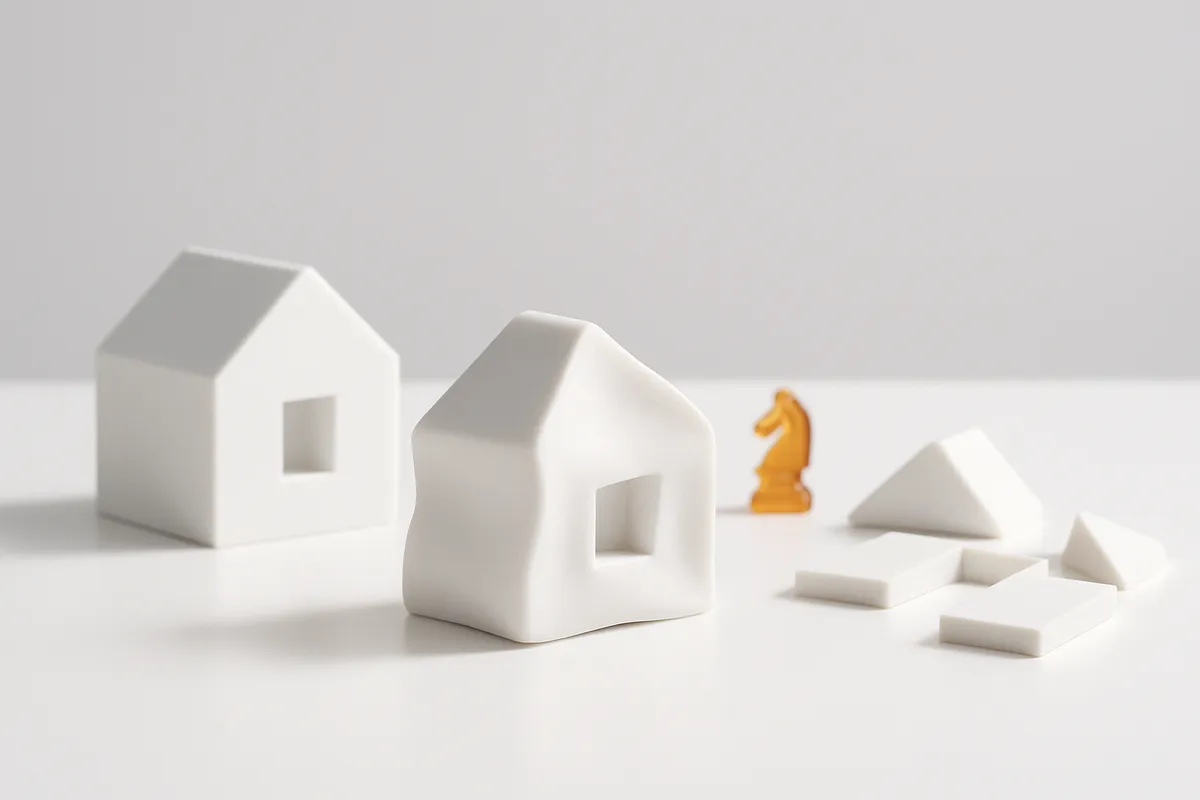
The data manifold is the surface in high-dimensional space where "real" images of a given class live. Think of it as a neighborhood on a map. In-distribution augmentations move within the neighborhood. OOD augmentations step outside it but stay close enough that the address (label) is still correct. Bad augmentations teleport to a different city entirely.
Put simply: the manifold is the boundary between useful augmentation and noise.
This view explains several practical observations:
Why distortion hurts attention but helps accuracy. A Stanford CS231n study found that perspective distortion caused significantly lower saliency map correlation (the model looked at different regions) and the largest standard deviation, yet still produced slightly higher validation and test accuracy than the baseline. The model learned a different but more generalizable representation — it moved off the original manifold but found a useful nearby one.
Why illumination augmentation doesn't fully replace real lighting data. Research from arXiv on the generalization gap in illumination augmentation showed that models trained with simulated lighting conditions don't fully match the generalization of models trained under real illumination. The augmented manifold and the real manifold overlap but aren't identical.
Why texture bias matters. According to Hendrycks et al. (ICCV 2021), biasing networks away from natural textures through diverse data augmentation improved OOD performance. Data augmentation gains on synthetic benchmarks (ImageNet-C) generalized to real-world distribution shifts (ImageNet-R), providing clear evidence against the hypothesis that robustness interventions cannot help with natural distribution shifts. However, the same study noted that existing augmentations weren't diverse enough to capture high-level semantic shifts like building architecture styles — the augmented manifold has limits.
What This Means for Your Project
The manifold view turns augmentation from guesswork into a structured decision:
- Map the real distribution. What variations does the deployment environment actually produce? These define the in-distribution manifold.
- Identify the manifold boundaries. Which transformations change the image without changing the label? These are candidate OOD augmentations.
- Test for label preservation. If a domain expert can't confidently label the augmented image, the augmentation has left the useful manifold.
Test-Time Augmentation (TTA): Free Accuracy or Hidden Risk?
Test-time augmentation applies transformations to input images during inference, generates predictions for each variant, and aggregates the results (usually by averaging). It's a simple technique that can improve accuracy without retraining.
But TTA interacts with in-distribution and OOD augmentation in ways that catch teams off guard.
When TTA Helps
TTA works well when the test augmentations match the training augmentations and stay within the data manifold. Flipping and minor crops at test time, for a model trained with the same transformations, effectively gives the model multiple "looks" at the same input. The aggregated prediction smooths out noise and boundary cases.
For classification tasks with moderate input variation, TTA can add one to three percentage points of accuracy at the cost of N× inference time (where N is the number of augmented views). Whether that trade-off is worth it depends entirely on the deployment context — batch processing of satellite imagery can absorb the cost; real-time video analysis usually cannot.
When TTA Hurts
TTA becomes dangerous for OOD detection. Aggressive test-time augmentations can make OOD inputs look more like in-distribution data, reducing the model's ability to flag unfamiliar inputs. A medical imaging system that applies heavy augmentation at test time might confidently classify an image from a completely different imaging modality — exactly the opposite of the desired behavior.
Honest take: TTA with mild, domain-appropriate augmentations is generally safe. TTA with aggressive augmentations on tasks where OOD detection matters is a liability. The same augmentation intensity that helps training accuracy can sabotage deployment safety.
TTA Decision Framework
| Scenario | TTA Recommendation |
|---|---|
| Batch classification, accuracy-critical | Use mild TTA (flips, small crops) |
| Real-time inference | Skip TTA — latency cost too high |
| OOD detection required | Avoid aggressive TTA; mild augmentations only |
| Self-supervised feature extraction | TTA can improve downstream task performance |
| Safety-critical systems | Test TTA impact on both ID accuracy and OOD rejection |
Balancing the Augmentation Stack: A Practical Approach
Here is what we recommend for teams building production vision systems:
Step 1: Start with In-Distribution Augmentations
Apply domain-appropriate transformations that reflect real deployment variation. Measure the baseline. If the model still overfits, move to step 2.
Step 2: Add OOD Augmentations Progressively
Increase augmentation intensity until overfitting is controlled. Monitor both training loss convergence (augmented datasets converge slower — this is expected and healthy) and validation accuracy. Stop when validation performance plateaus or starts dropping.
Step 3: Validate Label Integrity
For every OOD augmentation added, verify that the label remains unambiguous. This is not a theoretical exercise — run augmented samples past domain experts. One team's "acceptable color jitter" is another team's "the lesion is now invisible."
Step 4: Evaluate TTA Separately
Don't assume training augmentations transfer to test time. Evaluate TTA on a held-out set with both ID and OOD examples. Measure not just accuracy but also calibration and OOD detection rates.
When to Consider Generative Augmentation
GANs, VAEs, and diffusion models can generate synthetic training data that explores the manifold more thoroughly than geometric transforms alone. But as Comet's analysis notes, the computational cost can be significant, and generated images can introduce artifacts. Generative augmentation makes sense when traditional methods have been exhausted and the training set genuinely lacks diversity that can't be captured by geometric or photometric transforms.
Key Takeaway for Business
Augmentation is a budget allocation problem, not a checkbox. Every augmentation choice trades compute, model capacity, and potential accuracy against each other. The framework is simple:
In-distribution augmentations are baseline hygiene. Skip them and leave significant generalization on the table — the NeurIPS 2024 data shows a 14-percentage-point gap in OOD performance retention.
OOD augmentations are the primary regularizer for large models. They're not experimental — they're necessary. But label preservation is the hard constraint that can't be violated.
TTA is situational, not universal. It helps batch accuracy, hurts OOD detection with aggressive transforms, and costs inference time. Evaluate it for each deployment scenario independently.
Real numbers: the difference between a well-designed augmentation pipeline and a naive one can mean the difference between 64% and 78% retained OOD performance — and that gap translates directly into fewer production failures, fewer manual review cycles, and lower operational cost for any vision system running at scale.
Frequently Asked Questions
How should you balance in-distribution augmentations with out-of-distribution augmentations to avoid hurting model performance?
Start with in-distribution augmentations as the baseline, then add OOD augmentations progressively until overfitting is controlled. The key constraint is label preservation — if a domain expert can't confidently label the augmented image, the augmentation is too aggressive. Higher-capacity models tolerate and benefit from more aggressive OOD augmentation than smaller ones.
Why does test-time augmentation sometimes harm out-of-distribution detection when using aggressive transformations?
Aggressive TTA can make genuinely out-of-distribution inputs appear more similar to in-distribution data after transformation, reducing the model's confidence gap between known and unknown inputs. This effectively masks the signal that OOD detection systems rely on. Stick to mild, domain-appropriate augmentations for TTA when OOD detection is important.
How do you determine if an augmentation preserves the correct label, and what's the practical test for staying on the data manifold?
The practical test is domain expert validation: show augmented samples to someone who understands the task and ask them to label the image without seeing the original. If they can't assign the correct label confidently, the augmentation has left the useful manifold. Automate this check by monitoring validation accuracy as augmentation intensity increases — a drop signals manifold departure.
When should you choose generative augmentation methods over traditional geometric transforms?
Generative methods (GANs, diffusion models) are worth the compute cost when traditional augmentations have been exhausted and the training set lacks diversity that geometric or photometric transforms can't capture — for example, generating rare pathology variants in medical imaging or unusual object orientations. For most standard vision tasks, traditional augmentations combined with OOD techniques provide sufficient regularization at a fraction of the cost.
This article is based on publicly available sources and may contain inaccuracies.