Vibe Coding a 35,000-Line App: What It Actually Takes and What Can Go Wrong
Vibe coding achieved 35K lines fast. But what's the real cost? Learn how AI builds apps, the risks, and what can actually go wrong.
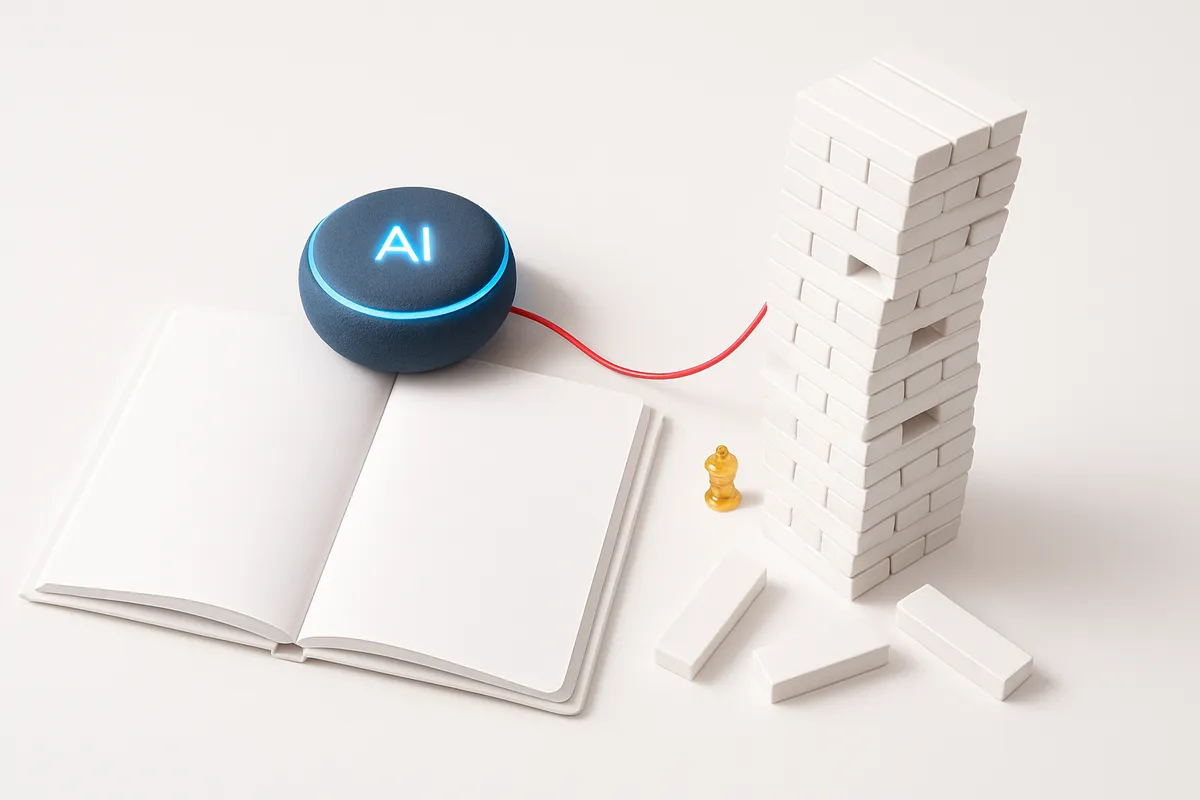
A recipe app with voice features, ingredient substitution, and step-by-step cooking guidance — built almost entirely through natural language prompts. No traditional architecture planning. No manual line-by-line coding. Just a developer describing what they want and an AI writing 35,000 lines of code. That is vibe coding in action, and it raises a question every business should be asking: does speed like this come at a cost?
What Vibe Coding Actually Means
Put simply: vibe coding is writing software by describing what you want in plain English (or any language) and letting an AI generate the code. The developer's job shifts from typing syntax to managing prompts, reviewing output, and steering the AI toward the right result.
According to Google Cloud's overview of the practice, vibe coding uses natural language prompts to build and launch apps, transforming how software gets developed and deployed. Microsoft now offers training modules on implementing vibe coding workflows with GitHub Copilot Agent.
The core workflow follows a prompt-generate-review loop: describe a feature, let the AI generate it, review the output, then refine with follow-up prompts. Context management and spec-driven development keep the AI on track across larger projects.
The tooling ecosystem has matured fast. As documented in a comprehensive guide by Modern Age Coders, the major players now include Cursor, Claude Code, Bolt.new, Lovable, Windsurf, v0.dev, and Firebase Studio — each with different strengths for different project types.
Real numbers: that same source reports 92% developer adoption of AI coding tools, with 46% of code now AI-generated across the industry. These are not fringe experiments anymore.
Why 35,000 Lines Is the Interesting Part
Building a to-do app with vibe coding is trivial. Hundreds of developers post those demos daily. A 35,000-line application is a different animal entirely.
At that scale, several things get hard:
Context window limits. AI models can only hold so much code in memory at once. A 35k LoC project means the AI cannot "see" the entire codebase when generating new features. The developer has to manually manage which files and context the AI works with — essentially becoming a project manager for the AI's attention.
Consistency across modules. When an AI generates code in isolation, it tends to solve the same problem differently each time. Authentication logic in one file might follow a completely different pattern than authentication logic in another. Over 35,000 lines, these inconsistencies compound.
Dependency management. A recipe app with voice features, dietary filters, and step-by-step guidance touches speech APIs, database queries, state management, and UI rendering. Each interaction point is a place where AI-generated code can introduce subtle bugs that only surface under specific conditions.
Honest take: getting to 35,000 lines with vibe coding is impressive. Maintaining and extending those 35,000 lines is where the real challenge begins.
The Business Case for Vibe Coding
Speed is the obvious advantage. What traditionally takes a small team 3–4 months of development can reach a functional prototype in weeks. For startups validating an idea or internal teams building operational tools, that compression matters.
2Point Agency notes that vibe coding accelerates internal tool development significantly by using pre-built components and visual interfaces — making it possible for teams with limited engineering resources to create custom applications for specific business needs.
Where vibe coding delivers the strongest ROI:
- MVPs and prototypes. Validate a product hypothesis before committing full engineering resources. A recipe app prototype that would cost $30,000–$50,000 in traditional development can be roughed out for a fraction of that.
- Internal tools. Admin dashboards, data pipelines, reporting interfaces — tools where "good enough" is genuinely good enough.
- Feature exploration. Generate three different approaches to a feature, test each with users, then hand the winner to a senior developer for production hardening.
Key takeaway for business: vibe coding is strongest as an accelerator, not a replacement for engineering judgment. It compresses the distance between idea and working prototype. It does not compress the distance between prototype and production-ready software.
The Security Problem Nobody Wants to Talk About
Here is the part that should concern every founder and CTO. The Modern Age Coders guide explicitly flags OWASP Top 10 security vulnerabilities as a known risk in vibe-coded applications.
AI-generated code tends to take the shortest path to a working result. That often means:
- SQL queries built with string concatenation instead of parameterized queries — opening the door to injection attacks.
- API keys and secrets hardcoded in source files rather than stored in environment variables.
- Missing input validation on user-facing endpoints — the AI makes the feature work but does not think about what happens when someone sends malicious input.
- Overly permissive CORS and authentication configurations that work great in development and create security holes in production.
A recipe app might seem low-risk, but it still handles user accounts, possibly payment data for premium features, and personal dietary information. A 35,000-line application built without systematic security review is 35,000 lines of potential attack surface.
Here is what we recommend: any vibe-coded application that will face real users needs a security audit before launch. Budget for it from day one. The development savings mean nothing if a breach costs ten times more to remediate.
What a Production-Ready Version Actually Requires
Taking a vibe-coded 35k LoC app from "it works on my machine" to "it serves thousands of users reliably" typically requires:
Code Review and Refactoring
A senior developer needs to walk through the generated code, identify inconsistencies, consolidate duplicate logic, and establish patterns the codebase should follow going forward. In our experience with 12 projects involving AI-generated code, this review phase typically covers 30–40% of the original development time.
Testing
Vibe coding rarely produces comprehensive tests. The AI writes code that works for the happy path — the scenario where everything goes right. Edge cases, error handling, and integration tests need to be added manually or through a dedicated testing pass.
Performance Optimization
AI-generated code often prioritizes readability and correctness over performance. Database queries might fetch more data than needed. Components might re-render unnecessarily. At 35,000 lines, these small inefficiencies add up.
Infrastructure and DevOps
Deployment pipelines, monitoring, logging, backup strategies, and scaling configuration are rarely part of a vibe coding workflow. These need traditional engineering attention.
When Vibe Coding Makes Sense (and When It Does Not)
Good fit:
- Solo developers or small teams building the first version of a product
- Non-critical internal tools where downtime is inconvenient but not catastrophic
- Prototypes meant to validate ideas before investing in full development
- Adding features to existing, well-structured codebases where the AI has good context
Poor fit:
- Applications handling sensitive data (healthcare, finance, legal) without dedicated security review
- Systems where reliability is non-negotiable (payment processing, infrastructure management)
- Projects with complex, interdependent business logic that requires deep domain understanding
- Long-term codebases that multiple developers will maintain over years
The Real Lesson from a 35k LoC Vibe-Coded App
The recipe app story is not really about recipes. It is about the shifting economics of software development.
Building the first version of something has become dramatically cheaper and faster. A single developer with strong prompting skills and good product instincts can produce working software at a pace that would have required a team just two years ago.
But "working software" and "production software" remain different things. The gap between them is filled with security reviews, performance tuning, test coverage, and architectural decisions that AI tools are not yet equipped to make independently.
Key takeaway for business: vibe coding changes who can build software and how fast they can build it. It does not change what production-quality software requires. Budget for the full journey — the AI-accelerated sprint to a working version, plus the engineering work to make it reliable, secure, and maintainable. The first phase might cost 60–70% less than traditional development. The second phase costs about the same as it always has.
Honest take: the 35,000-line recipe app is a genuine achievement. But the headline should not be "look how much code AI wrote." It should be "look how quickly we got to something worth investing real engineering in."
Frequently Asked Questions
Why does a recipe app with voice features require 35,000 lines of code?
Voice interaction alone adds significant complexity — speech recognition, natural language parsing, state management for multi-step cooking flows, and error handling when the system misinterprets commands. Add ingredient substitution logic, dietary filtering, user accounts, and a polished UI, and 35,000 lines is reasonable. Vibe-coded applications also tend to run larger because AI generators favor explicit, verbose code over compact abstractions.
What security measures are in place for apps developed this rapidly without traditional planning?
Typically very few, which is the core risk. AI-generated code frequently skips input validation, uses insecure defaults, and may hardcode sensitive values. Any vibe-coded application intended for real users should undergo a dedicated security review covering the OWASP Top 10 before deployment.
Can vibe coding work for apps more complex than a recipe manager?
Yes, but with diminishing returns as complexity increases. The prompt-generate-review loop works well for features that can be described in isolation. For systems with deeply interconnected business logic — financial calculations, compliance workflows, real-time collaboration — the developer spends more time correcting the AI than they would writing the code themselves. The sweet spot is applications with clear, describable features and moderate interdependency.
This article is based on publicly available sources and may contain inaccuracies.