What Is an Agentic Harness? The Layer That Runs the AI
What's an agentic harness? The software layer that decides if your AI project ships or stalls—and why most teams get it wrong.
The word everyone is using and almost no one defines
"Harness" gets thrown around in AI conversations as if it's obvious. Most people quietly assume it means "the IDE," or "the chat window," or "whatever app I'm typing into." It isn't any of those. And the confusion is expensive, because the harness — not the model — is usually what decides whether your AI project ships or stalls.
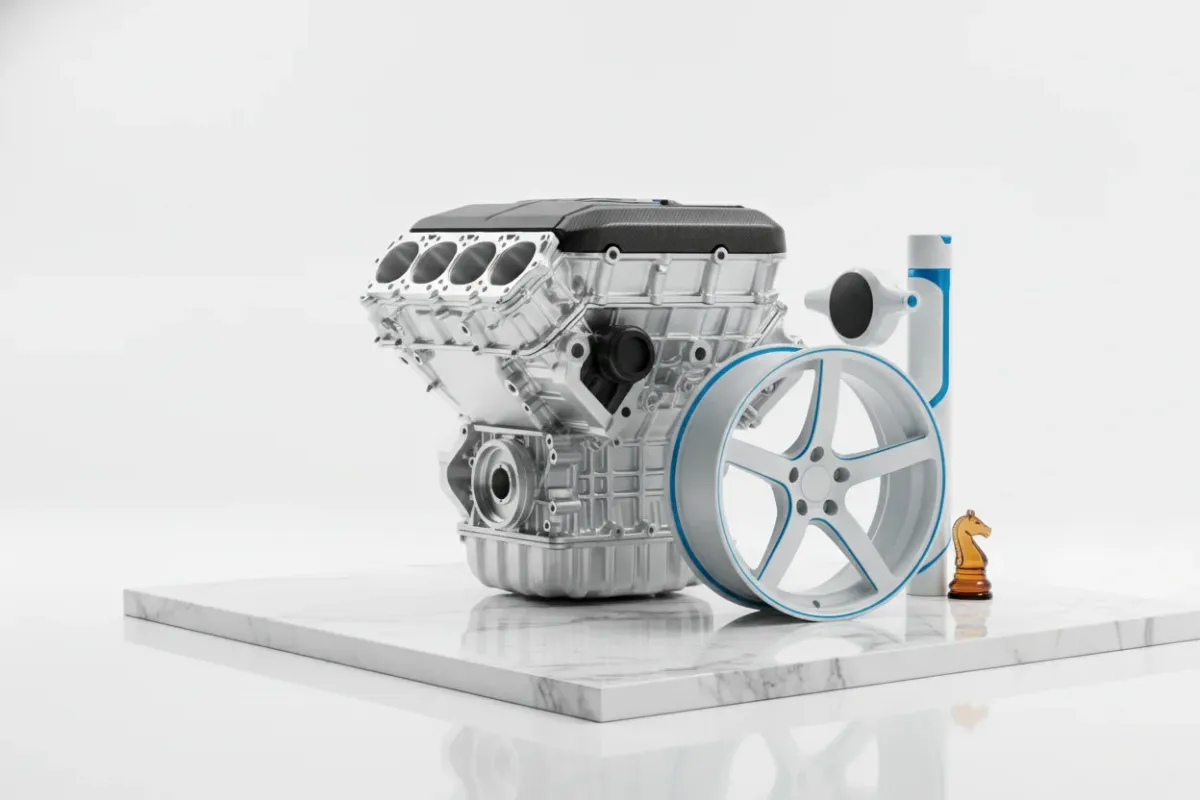
Put simply: the model is the engine. The harness is the rest of the car. A brilliant engine sitting on a warehouse floor moves nothing. Bolt it into a chassis with wheels, a steering column, brakes, and a fuel line, and now it drives. The agentic harness is that chassis for a large language model.
This matters for anyone budgeting an AI initiative, because teams routinely spend months arguing about which model to use — and then get mediocre results because the surrounding harness was an afterthought.
So what is an agentic harness, actually?
An agentic harness is the software layer that wraps a language model and turns it from a text predictor into something that can take actions and finish tasks. A raw model does exactly one thing: you send it text, it sends text back. That's the entire product. Everything else an "AI agent" appears to do — read your files, run a command, search the web, edit code, check its own work — is the harness doing it on the model's behalf.
A harness is made of four moving parts:
1. The agent loop
A bare model answers once and stops. A harness runs the model in a loop: send the request, read the reply, notice the model wants to do something, do it, feed the result back, and ask again — over and over until the task is actually done. This loop is why an agent can work through a twenty-step job instead of producing one paragraph and quitting.
2. Tools
Tools are the hands. The harness gives the model a menu of actions it can call — read a file, write a file, run a shell command, query a database, hit an API — and translates the model's requests into real operations on your systems. If you want to understand the plumbing underneath every one of those calls, our breakdown of what really happens in an LLM API call walks through the request-response cycle the harness is orchestrating on repeat.
3. Context management
Every model has a fixed context window — a hard ceiling on how much text it can consider at once. On a long task, the conversation blows past that ceiling. A good harness handles this automatically: summarizing earlier work, dropping stale detail, and re-injecting the important parts so the agent doesn't "forget" what it was doing halfway through. Anthropic's engineering team calls this kind of scaffolding the difference between a demo and a system in their guide on building effective agents.
4. Permissions and guardrails
The same tool that lets an agent fix a bug also lets it delete a database. The harness is where guardrails live: which commands need human approval, which directories are off-limits, what gets logged, and how a risky action gets paused for sign-off. This is the layer that makes an autonomous agent safe enough to point at a real codebase.
Strip those four parts away and you're left with a chatbot. Add them and you have a coworker.
Why the harness matters more than the model
Here is the counterintuitive part for most business leaders: two teams using the identical model can get wildly different results, purely because their harnesses differ.
The clearest public evidence is SWE-bench, a benchmark that measures whether an AI can resolve real GitHub issues from open-source projects (the "Verified" subset is 500 human-validated problems). On the leaderboard, submissions are pairs: a model and a harness — often called an "agent scaffold." The same underlying model, run inside a stronger scaffold, resolves significantly more issues. The scaffold isn't a footnote; it's a headline variable.
Real numbers: you don't need a benchmark to feel this. A model with no tools can describe how to fix your login bug. A model in a capable harness can open the file, reproduce the bug, patch it, run the tests, and tell you they pass. One produces advice; the other produces a merged change. The gap in business value between those two outcomes is enormous — and it comes entirely from the harness.
What this means for your project: when you evaluate AI tooling, "which model?" is the second question. The first is "what can the harness around it actually do inside our environment?"
A concrete example: from "I think" to "I checked"
Consider a genuinely common task — checking whether a project depends on a package with a known security flaw. This is where the term CVE comes in.
So, what is a CVE vulnerability? CVE stands for Common Vulnerabilities and Exposures — a public catalog, maintained through the U.S. National Vulnerability Database, that assigns every publicly known security flaw a unique ID (like CVE-2021-44228, the Log4Shell flaw). When a security advisory says a library is affected by "a critical CVE," it's pointing at one of these catalog entries.
Now watch the harness make the difference:
- Bare model: ask "does my project have any CVE vulnerabilities?" and it can only guess from training data that's months old. It has never seen your actual dependencies. Its answer is an educated hallucination.
- Harnessed agent: the same model, given a shell tool, runs
npm audit, reads your lockfile, cross-references the live CVE database, and reports the exact packages, versions, and severity — with a suggested upgrade path.
Same model. One says "I think." The other says "I checked, here are the three affected packages." That leap — from plausible guess to verified fact — is the entire reason harnesses exist. It's also why AI security tooling is moving toward specialized, tool-equipped agents rather than raw chatbots, a shift we cover in our piece on vertical AI agents and review fatigue.
Agentic AI vs AI agents: where the harness fits
Because the vocabulary is muddy, two phrases get used interchangeably and shouldn't be. The distinction is worth thirty seconds because it clears up a lot of marketing fog.
In the debate of agentic AI vs AI agents, the cleanest way to separate them:
- An AI agent is a specific thing: one model wrapped in one harness, looping through tools to accomplish a task. The coding assistant that fixes your bug is an AI agent.
- Agentic AI is a property, not a product. It describes a system that plans, acts, observes the result, and adapts — behavior rather than a single component. A pipeline of several agents handing work to each other is agentic AI; so is a single sufficiently autonomous agent.
Here's the part that resolves the whole ai agents vs agentic ai argument: neither one exists without a harness. "Agentic" is just a description of behavior that a harness produces. Take away the loop, the tools, and the feedback, and you don't have agentic anything — you have autocomplete. The harness is the thing that earns the word "agentic" in the first place.
The harness is your AI's DevOps pipeline
A useful analogy for anyone who has shipped software: a harness is to an AI agent what a CI/CD pipeline is to a commit.
If you're wondering what a DevOps pipeline is, it's the automated assembly line that takes a code change through fixed stages — build, test, security scan, deploy — with checks and gates at each step so nothing broken reaches production. The value isn't any single stage; it's the orchestration: predictable steps, guardrails, and a record of what happened.
A harness does the same job for a model's reasoning. It orchestrates the agent through stages — understand the task, gather context, act, verify, report — with permission gates and logging at each step. Nobody would run a serious engineering org by pasting code straight to production with no pipeline. Running a serious AI agent with no harness is the same mistake wearing a different hat.
What to look for when choosing (or building) a harness
Not all harnesses are equal. When evaluating one, five things separate a toy from a workhorse:
- Tool breadth and quality. Can it touch the systems that matter to you — your repo, your database, your ticketing, your cloud? Tools are the ceiling on what the agent can accomplish.
- Context management. Does it gracefully handle long tasks, or fall apart the moment work exceeds the context window?
- Permissions and auditability. Can you scope what it's allowed to do, require approval on risky actions, and see a full log afterward? This is non-negotiable for anything near production.
- Observability. When the agent does something surprising, can you trace why? Opaque harnesses are impossible to trust or improve.
- Extensibility. Can your team add custom tools and rules, or are you locked into whatever shipped in the box?
For teams building lightweight, focused tools rather than adopting a heavyweight platform, the pragmatic middle path we describe in vibe coding for niche apps applies here too: start with a capable off-the-shelf harness, add only the custom tools your workflow actually needs, and resist the urge to rebuild the plumbing yourself.
Trade-offs and the honest take
More harness means more power — and more surface area for things to go wrong. A tool-rich agent that can run shell commands is dramatically more useful and dramatically more capable of doing damage. That's not an argument against harnesses; it's an argument for treating permissions and logging as first-class, not as features you'll "add later."
There's also a build-vs-buy decision. Mature, off-the-shelf harnesses already solved the hard, unglamorous problems — the loop, context compaction, permission gates, tool protocols. Rebuilding those from scratch to save a licensing fee usually costs far more in engineering time than it saves.
Honest take: most teams that struggle with AI agents don't have a model problem. They have a harness problem — thin tooling, no context strategy, no guardrails — and they blame the model because the model has a brand name and the harness doesn't.
Key takeaway for business
Key takeaway for business: the harness is where AI value is won or lost. Three things to carry into your next planning meeting:
- The model is the engine; the harness is the car. Budget attention for both. A weaker model in a strong harness routinely beats a stronger model in a weak one — SWE-bench shows exactly this, publicly.
- Capability, safety, and auditability all live in the harness. Tool access, permission gates, and logging aren't add-ons. They're the difference between an agent you can point at production and a demo you can only show in a sandbox.
- Ask the right first question. Not "which model is smartest?" but "what can the harness around it actually do — and verify — inside our systems?"
Here is what we recommend: before your team commits to any AI platform, run one real, end-to-end task through it — something that requires reading your files, taking an action, and proving the result. The gap between what a bare model claims and what a harnessed agent verifies will tell you everything about where the real work happens.
This article is based on publicly available sources and may contain inaccuracies.